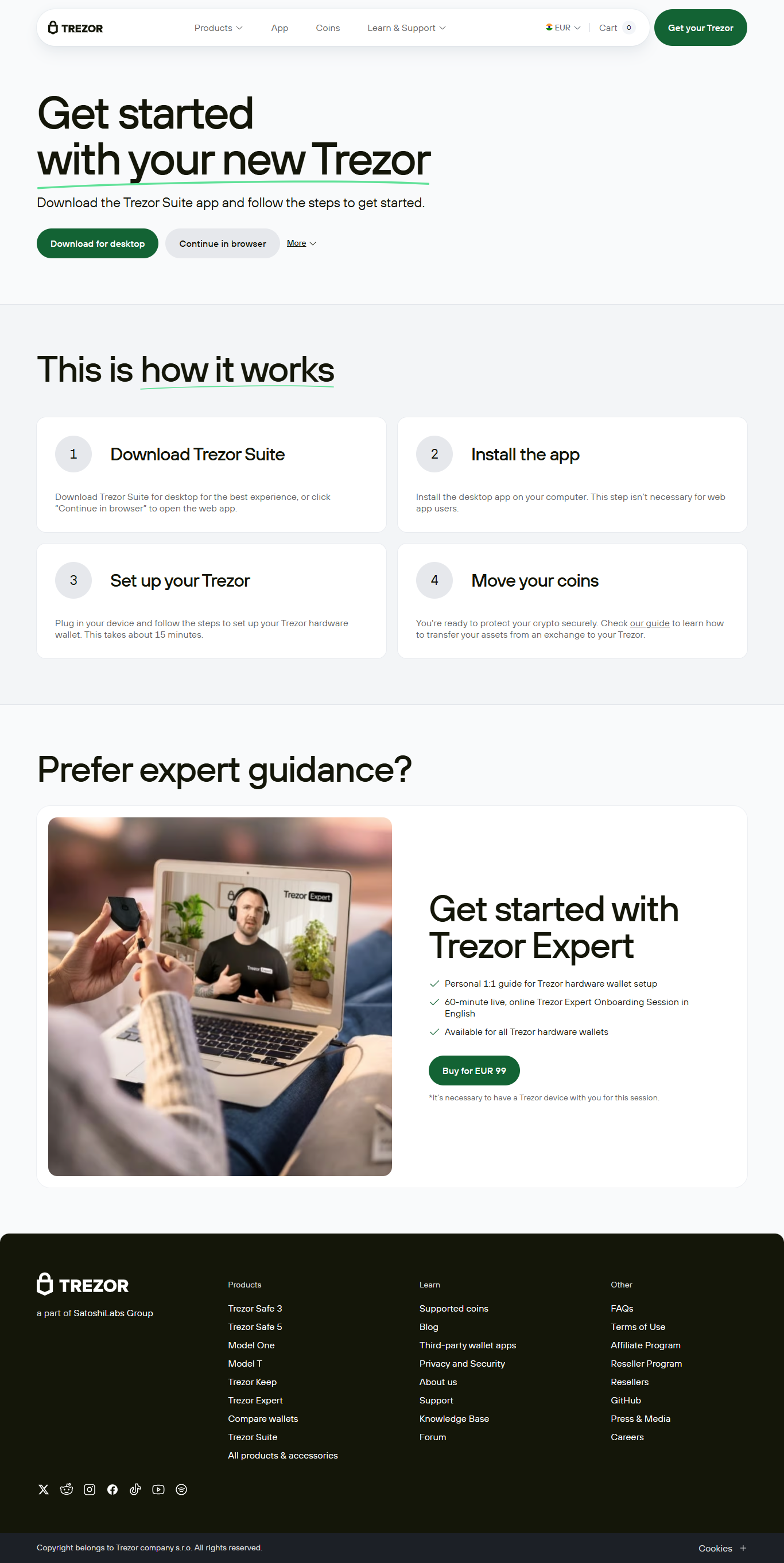
Trezor is one of the most trusted hardware wallet brands in the cryptocurrency world, recognized for its top-tier security, open-source design, and user-friendly interface. Accessing your wallet through the Trezor Login process is an essential step for managing your digital assets safely. Unlike traditional online accounts, Trezor does not store your private keys or login credentials on centralized servers. Instead, all sensitive data remains inside your physical device, putting you in complete control of your cryptocurrency holdings. This article provides a comprehensive, 2000-word guide to understanding how the Trezor login process works, how to set it up, common issues, best security practices, and tips for maintaining a smooth user experience.
When users think of “logging in,” they usually picture entering a username and password. Trezor functions differently. Since it is a hardware wallet, the login process is designed around verifying that you physically control the device. The Trezor login ensures that only the authorized owner can access the wallet interface through Trezor Suite—the official desktop and web application for managing your cryptocurrencies. Instead of typing a password into a webpage, you authenticate your identity by connecting the device, confirming on-screen prompts, and entering your PIN using a unique, randomized layout that prevents keylogging attacks.
This login method offers a strong layer of protection because your private keys never leave the device. The interface only displays your balances and allows you to send or receive funds, but all signing actions occur inside the hardware. This structure makes phishing, malware attacks, and unauthorized access far more difficult compared to software wallets or exchange accounts.
The login process begins whenever you need to connect to Trezor Suite or the Trezor Web Interface. After connecting your device to your computer or smartphone, the system will prompt you to unlock it using your PIN. This PIN protects your hardware wallet in case it is lost or stolen. Only after entering the correct PIN will the device communicate with the Trezor Suite, allowing you to access your portfolio dashboard.
The login process generally involves the following steps:
Once the login process is completed, you will be able to view your assets, check transaction history, manage accounts, buy or exchange tokens, and adjust security settings.
Trezor Suite is the official application designed to provide a seamless login experience. It allows users to interact with their Trezor device in a secure and intuitive environment. Unlike unofficial tools or third-party wallets, Trezor Suite is maintained by the Trezor development team and updated regularly to ensure optimal performance and security.
Here are some key benefits of using Trezor Suite for your Trezor login:
Security is the primary reason users choose Trezor over online wallets or mobile apps. The login process reflects the company’s commitment to protecting user funds through multiple layers of verification. Here are some of the key security advantages:
The PIN is required every time you log in. Even if someone steals your device, they cannot access your crypto without the PIN. After several incorrect attempts, the device initiates increasingly longer time delays, making brute-forcing impossible.
When entering your PIN, the layout changes every time. This protects you from malware such as keyloggers that attempt to record keystrokes.
Advanced users can enable a passphrase, which acts as a “25th seed word.” It provides additional wallet compartments that only open when the correct passphrase is entered. Even if someone obtains your recovery seed, your assets stay protected unless they also know the passphrase.
Private keys never touch an online device. All signing and key-related operations occur within the hardware wallet, eliminating the risk of remote attacks.
Trezor’s firmware is publicly auditable, which means the community and security researchers can examine the code for vulnerabilities. This transparency increases trust and ensures that hidden backdoors or malicious code cannot exist.
Even though Trezor is designed for a smooth login experience, users may occasionally encounter issues that prevent them from accessing their wallet. Below are some common problems and their solutions.
Sometimes a computer may fail to recognize the Trezor device. This can be due to outdated drivers, USB cable issues, or blocked communication protocols. Try switching USB ports, using the original cable, or restarting the Trezor Suite application.
If you repeatedly enter the wrong PIN, the device increases the delay before each attempt. Make sure you carefully follow the randomized grid. If you lose your PIN, you must reset the device and recover it using your seed phrase.
The web version of Trezor Suite may not work well with certain browsers or extensions. Using Chrome or Firefox and disabling conflicting extensions typically resolves this issue.
Occasionally, the device may require a firmware update before login is allowed. Updating through Trezor Suite is safe and straightforward. Always ensure your seed phrase is backed up before updating.
Trezor Bridge is a communication tool required for the web interface. If it is outdated or blocked by antivirus software, your device may not connect properly. Reinstalling the bridge usually solves the problem.
Using a hardware wallet is one of the safest ways to store cryptocurrency, but users must still follow best practices to maintain high levels of security. Here are some essential recommendations:
Following these guidelines ensures your Trezor login remains safe and your funds stay protected.
While the Trezor login process relies on the PIN and physical device, your recovery seed remains the master key that controls wallet access entirely. The recovery seed is the only way to restore your wallet if the device is lost, stolen, or damaged. It is important to understand that Trezor does not store your seed phrase anywhere; only you know it. Anyone who gains access to your seed can restore your wallet on another device and take your funds. For this reason, the seed should never be stored digitally or photographed.
The recovery seed is typically composed of 12, 18, or 24 words. During setup, Trezor displays the words in sequence, and you must write them down carefully. This seed is the ultimate safeguard, so treat it with the highest level of caution.
Trezor offers two major device models: Model One and Model T. While both offer robust security features, there are differences in the login experience.
Model T’s touchscreen provides enhanced security because you enter your PIN on the physical device rather than through the computer, reducing exposure to malware.
Cybersecurity threats remain one of the biggest challenges in cryptocurrency adoption. Exchanges and software wallets can suffer from hacks, key theft, phishing attacks, and malware infections. The Trezor login system solves many of these vulnerabilities by eliminating reliance on online infrastructure. Since the wallet signs transactions internally, attackers cannot remotely seize your funds even if your computer is compromised.
In a world of increasing digital threats, a hardware-based login—reinforced by a PIN, passphrase, seed protection, and physical verification—offers unmatched peace of mind.
The Trezor login process is designed to provide crypto users with secure, reliable, and seamless access to their hardware wallet. By verifying identity through the physical device and PIN, users can ensure that their cryptocurrency remains safe from unauthorized access. Trezor’s combination of offline key storage, randomized PIN entry, passphrase support, and open-source security elevates it above standard online wallets.
Whether you are a beginner or an experienced crypto investor, understanding the Trezor login system allows you to make the most of your device and maintain the highest level of protection for your assets. By following best practices, regularly updating your firmware, and safeguarding your recovery seed, you can confidently manage your digital wealth using Trezor—one of the world’s most trusted hardware wallets.